.png)

1848 Royal Kalendar & Almanac PARLIAMENT SPEAKER'S PERSONAL COPY Finely Bound
- WoodPaz Books

- Apr 3, 2023
- 3 min read








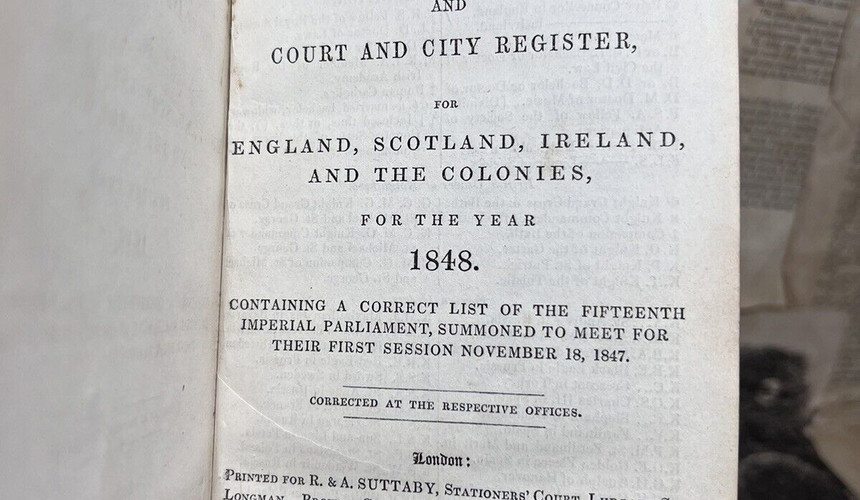

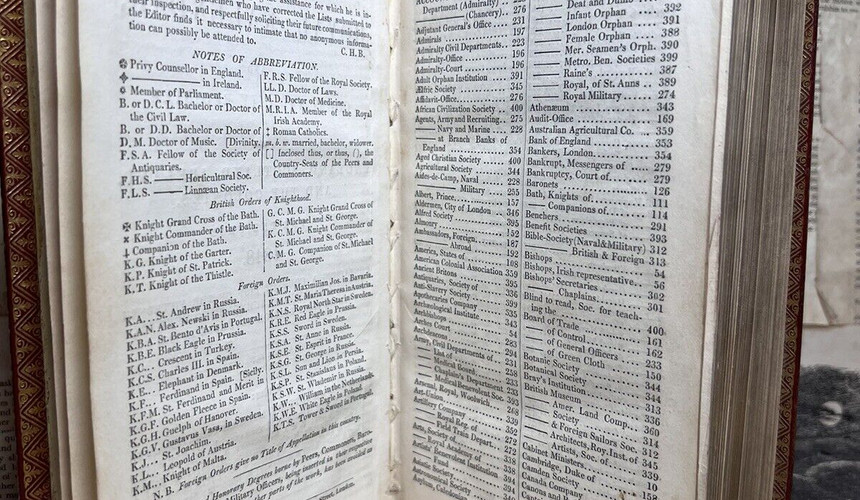


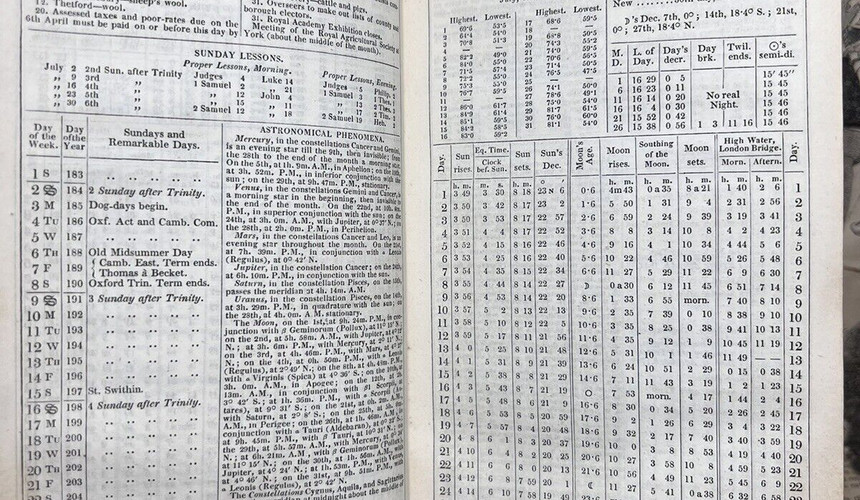


The Royal Kalendar (calendar), and Court and City Register, for England, Scotland, Ireland, and the Colonies, for the year 1848. Containing a Correct List of the Fifteenth Imperial Parliament, Summoned to Meet for their First Session November 18, 1847. London; Printed for R. & A. Suttaby et. al. The house speaker of Parliament's personal copy with engraved gilt boards. It remains a long-standing tradition in British politics for the Parliament speakers to have almanacs personally bound for them. The practice dates back to the 17th century and is still observed today. They are typically bound in red leather and contain information on important dates, astronomical events, and other useful information. The speaker's almanac is considered to be a valuable and prestigious item, reflecting the historical importance and tradition of the role of the Speaker in British Parliament. The British parliament website says that the almanac is "a symbol of the Speaker's role as a custodian of tradition and the history of the house of Commons", also including a photograph of the current Speaker's almanac bound in red leather with the Speaker's coat of arms. ------------------- Containing: Interesting information relating to the United States of America from the colonial British perspective, information from the astronomical society with the British Almanac for 1848 with various data on the houses of peers and commons, the colonies, commerce, universities, royalty, etc. There is also an army list bound in towards the rear of the rather thick volume.
-------------------
An almanac is an annual publication that contains a variety of information on a wide range of topics, including but not limited to astronomy, astrology, weather, agriculture, and politics. These publications have been in existence since the Middle Ages and are often used as reference guides by farmers, sailors, and other professionals who require knowledge on seasonal patterns and other practical matters.
The first edition of the Royal Kalendar was printed in 1761 by John Exshaw in Dublin, Ireland. It was originally called "The Dublin Kalendar", and it provided information on the local courts, legal system, and government officials. Over time, the publication expanded to cover a wider range of topics and to include information from across the British Isles and its colonies. In 1765, the publication was renamed the "Royal Kalendar", and it began to include information on the royal family and other prominent figures. The publication also began to include sections on trade and commerce, and it became an essential resource for businessmen and merchants. In the 19th century, the Royal Kalendar underwent several changes and adaptations. The publication became more focused on political and social events, and it provided detailed information on the various colonies and territories of the British Empire. It also began to include more extensive directories of government officials and other important figures.
-------------------
Size: 18cm x 11cm x 6cm, thick octavo.
Condition: Near Fine (NF)
Sumptuous red sheep fine binding with decorative gilt, slightly rubbed with very minor wear to extremities but generally very good with bright gilt. Bright gilt page edges with minor sporadic dulling and scratches but also very good. Rather handsome gilt turn-ins line cream pastedowns and endpapers without any bookplates or writing. No writing throughout text block which is collated as complete. Incredibly clean text block only with some staining to the final two leaves else near fine/fine. An incredibly handsome finely bound book with the parliamentary seal to both boards with 'THE SPEAKER' in gilt below.


Comments